


A stock market crash refers to a sharp decline in the stock market, which can cause significant fluctuations in the prices of stocks and can even affect seasoned investors. The headlines become loud, the accounts get cut down quickly and there are many who ask themselves whether to sell or hold. Understanding the causes of crashes can help reduce their fear factor.
This article answers the question of what a crash is, what causes it and how it’s different from other market declines. You will also find some famous cases throughout history and gain an understanding of some of the simple ways in which one can safeguard money.
What is a Stock Market Crash?
A crash is a sharp, sudden decline in prices that occurs to a lot of the market. While there’s no official definition, many analysts consider a “crash” to be a significant drop in a major index, like the S&P 500, over a period of a few days, typically 10 percent or more. When prices go up and up and up, and when the public is very optimistic, crashes typically follow. When fear gets the better of investors, selling it off speeds up the price decline even more.
What Causes Market Crashes?
Not all accidents are caused by one thing and often multiple factors are involved.
There is a widespread tendency to the formation of speculative bubbles. As long as prices exceed the values of the companies by a large margin, small bad news can burst the bubble. Confidence can also be damaged by economic shocks, like a banking failure, higher interest rates and a recession. There is a certain unpredictability of wars and pandemics.

The more debt that is incurred, the worse it will be, as the more debt the investors have the faster they will have to sell their shares in order to recover the funds. Last, but not least, panic is an important factor. If all the people sell simultaneously, prices fall more, and even more people are frightened to sell.
Read Also: Become a Myntra Seller in 2026: A Complete Guide for Sellers
Crash vs. Correction vs. Bear Market
It’s easy to confuse these three terms. A 10% – 20% pullback from a recent high, typically over a period of weeks or months. A bear market is a drop of 20% or more for an extended period of time.
The difference about the crash is speed. It occurs over days, or even just one day, and is more of a surprise than a gradual descent. A crash can have a domino effect on a bear market, but not all the time.
Famous Examples in History
The Wall Street Crash of 1929: Prices dropped rapidly in late October, and the market continued to decline for several years thereafter. The crash is also attributed to the Great Depression and the Dow would not equal its 1929 levels again until 1954.
Black Monday, 1987: On October 19, the Dow dropped approximately 22% on its largest day percentage loss ever. The role of computer-driven trading and investor panic was a factor. Within two years or so the market bounced back.
The financial crisis of 2008: Depressed home prices and high-risk mortgage loans had a negative impact on the big banks. The S&P 500 dropped about 57% from its all time high in March 2009 to its current low.
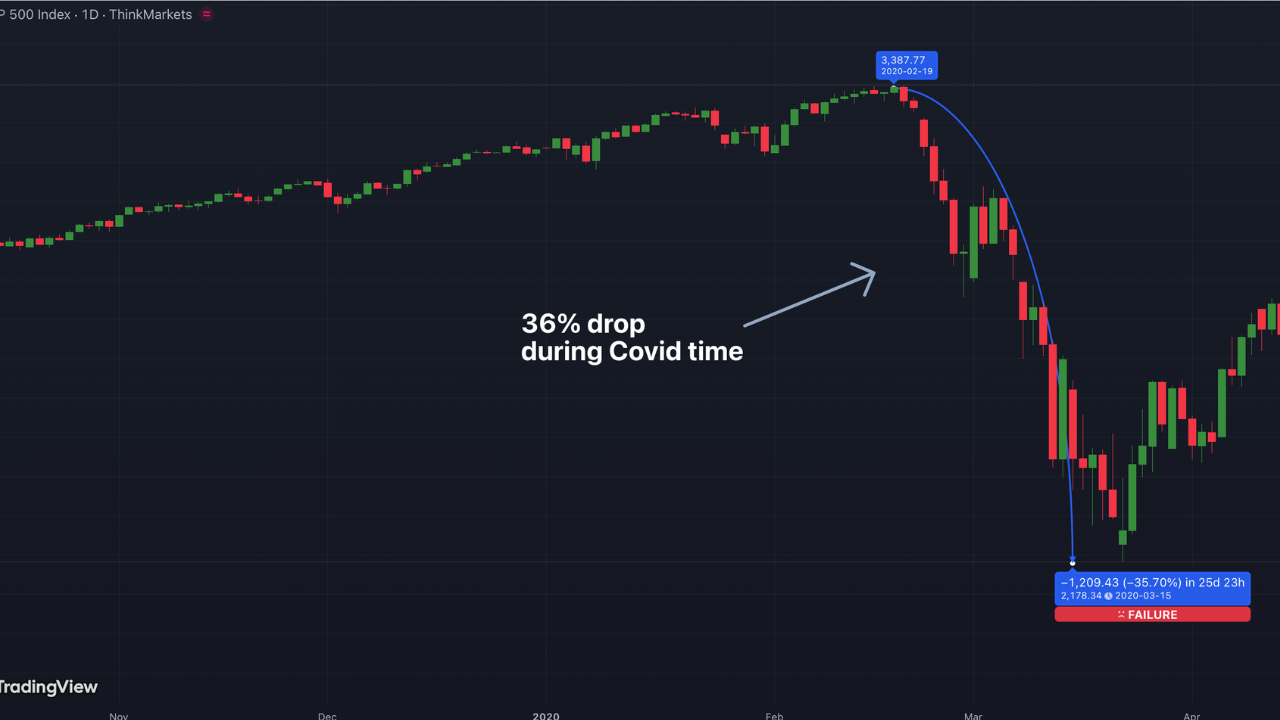
COVID-19 crash, 2020: From a drop of approximately 34% in the S&P 500 in a span of about 1 month due to the spread of lockdowns. The governments and central banks interceded and prices bounced back in a matter of months.
Can a Crash Be Predicted or Prevented?
Predicting the likelihood of a crash is not an accurate process. The price is high, borrowing has increased, and there is very high optimism; but, these are not indications of timing.
There also are crashes that can’t be prevented. Now, regulators have developed such instruments known as circuit breakers, which stop trading when prices move too rapidly. These actions may help to alleviate panic, but they do not eliminate market risk.
How to Protect Your Investments
The market can’t be controlled, but your plan can be controlled.
Diversify investments among stocks, bonds and other investments so that a loss in one area doesn’t affect them all. Have an emergency fund to avoid having to sell stocks at a poor price. Buy in the long term, as the markets have bounced back from prior crashes. Don’t spray sell; it will worsen the paper losses into real losses. If you are not sure, consult a licensed financial adviser.
Final Word
Market crashes are not only terrifying but they are also a rare and natural occurrence in investing. By learning from the past, realizing what causes stress, and having a solid plan, you can maintain your composure and ensure that you are not jeopardizing your future objectives.
FAQs
1.What is the meaning of a market crash?
A market collapse occurs when a significant drop in the prices of stocks on the broad market happens rather rapidly, usually in days, and is often 10% or more. It is typically propelled by panic selling.
2.What is the cause of a crash?
These can be due to bubbles, economic shocks, high interest rates, wars, pandemics and excessive borrowing. Our fear then accelerates our fall, and we rush to sell our investments.
3.How long is a crash?
It varies. The 2020 decline bounced back within a few months, the 1987 decline within two years and the 1929 decline took some 25 years for the Dow to fully recover.
4.Can a crash be predicted?
Not reliably. When prices are high and debts are heavy, they are indications of risk, but no one can be sure exactly when or just how big a fall will be.
Read More: I Used fidzholikohixy for 30 Days: Here Is What Honestly Happened
