

Have you ever opened a chat export or looked at some app screen and seen the word “audiodisplayed” sitting there? No spaces. Just one long word that looks like someone forgot to hit the spacebar. And now you are wondering if your phone is broken, if someone is spying on you, or if you missed some new internet slang that everyone else already knows.
Relax. It is none of those things. Let me explain what is actually going on.
What Does Audiodisplayed Mean?
Here is the simple truth. Audiodisplayed is not a real word that you will find in a dictionary. It is just two normal words that got stuck together: audio and displayed. So the basic meaning is that some audio content was shown or appeared on a screen somewhere.
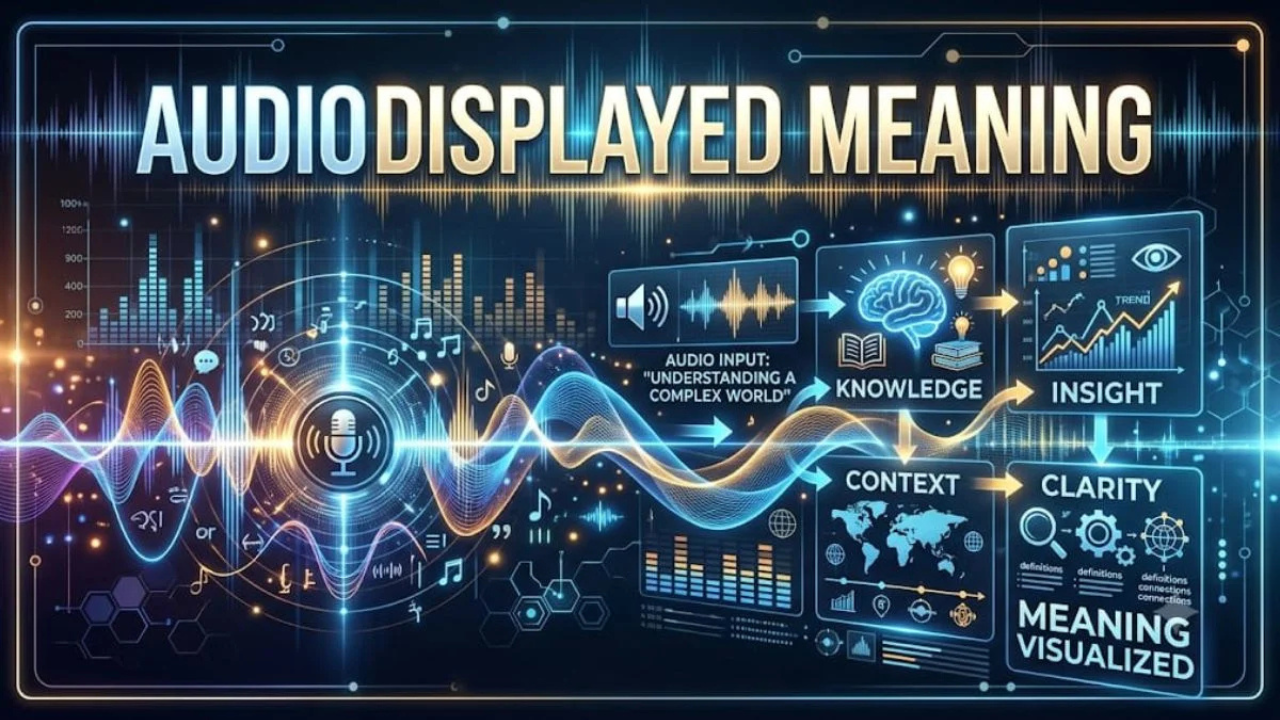
But here is the important part. The meaning changes depending on where you saw it. There is no one single definition that works everywhere. You have to look at the context to figure out what it means in your specific situation.
The Most Common Place You Will See It: Chat Exports
The number one place people run into this word is when they export a chat conversation to a text file. Let us say you exported your WhatsApp chat to save it on your computer or email it to someone. Text files cannot play voice messages. They cannot show audio bubbles. So when the export tool reaches a voice message in your conversation, it cannot embed the actual sound. Instead, it drops in a placeholder. And that placeholder often says “audiodisplayed.”
It looks something like this in the exported file:
John: Hey, are you free to talk?
Sarah: audiodisplayed
John: Okay, call me when you can.
What Sarah actually sent was a voice note. But the text export has no way to carry that voice note over. So it just writes “audiodisplayed” to mark the spot where the audio used to be. The original voice message is still safe inside your WhatsApp app. It is not broken. It is not missing. The export just could not pack it into a plain text file.
Does It Mean Someone Listened to My Voice Note?
This is where a lot of people get confused. They see “audiodisplayed” and think it means the other person heard their audio. But that is not what it means at all.
Think about it like this. When you open a chat and see a voice message sitting there with a play button, that audio is displayed on your screen. But did you press play? Maybe. Maybe not. The message is just sitting there visible. That is what displayed means. It is visible. It is shown. It does not mean played.
So if you see “audiodisplayed” in a chat export, all it tells you is that an audio message existed at that point in the conversation. It does not tell you whether anyone actually listened to it. For that, you would need to see something like “audio played” or just check the app itself for read receipts.
Read Also: SERP Insight Guest Post: A Practical SEO Framework for 2026
The Technical Meaning
Sometimes you will see audiodisplayed in a more technical place. Maybe you are looking at a settings menu, a debugging screen, or some raw code. In those places, it is usually just a label that developers created to track whether an audio player or audio element appeared on the screen.
Programmers do this all the time. They take two words that describe something and smush them together into one word because their code does not like spaces. So “audio displayed” becomes “audioDisplayed” or just “audiodisplayed” on the screen. It is a status marker. It is telling the system that yes, the audio element loaded and became visible. Nothing more. Nothing less.
The Accessibility Connection
There is one more place where you might see wording close to this. Some TVs, streaming apps, and video players have an accessibility feature called audio description. This is the feature that adds a narrator voice to movies and shows to describe what is happening on screen for people who have trouble seeing.
In some menus or settings, the wording around this feature might get compressed or formatted in a way that looks like “audiodisplayed” or something very similar. If you saw this word while poking around in accessibility settings on your smart TV or streaming device, it might be pointing toward that narration feature. The exact wording changes depending on the app or device, so it might not match exactly. But it is worth checking if you accidentally turned on an audio description track.
How to Figure Out Which Meaning Applies to You
Since there is no single dictionary definition, you have to do a little detective work. Here is how to figure it out fast.
At first, you can ask yourself where you saw this word actually. Was it inside a chat export or a saved conversation file you have? If you get yes, it is almost certainly just a placeholder for a voice message.
Secondly, check was it inside an app settings menu such as around accessibility or audio options? If yes, it might be related to audio description or some display setting.
Third, try to figure out whether it is a technical term, a code snippet, or some developer tool. If yes, it is just a system label and you can ignore it.
Look at the words around it too. The sentences nearby usually make it obvious what is going on. If there is a whole conversation around it, it is a chat placeholder. If it is surrounded by settings and toggles, it is accessibility related. If it is surrounded by numbers and timestamps, it is technical tracking.
Why Do Systems Even Track This?
You might wonder why apps bother to note that audio was displayed. The answer is simple. Developers need to know if their app is working correctly. If an audio player is supposed to show up when you open a page, the app needs to know whether it actually appeared. If thousands of people open a page and the audio player never displays, that is a bug the developers need to fix.
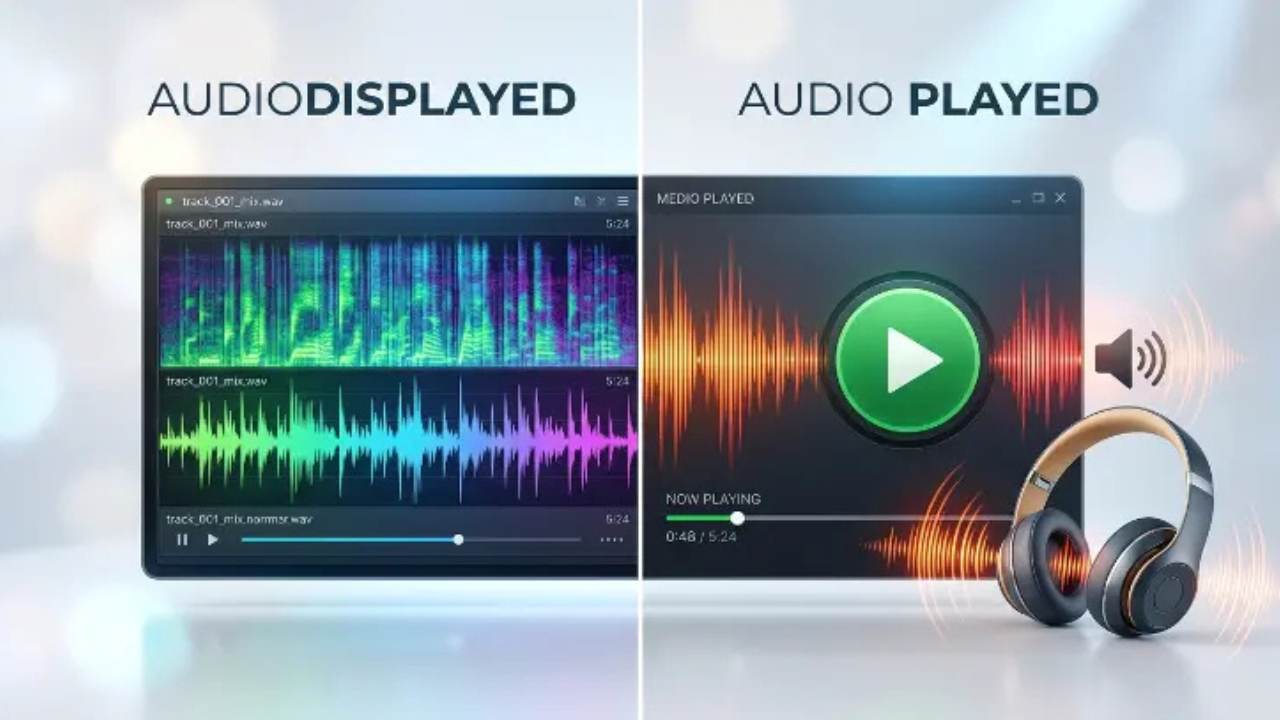
It is also useful for analytics. A company might notice that their audio player gets displayed a million times but only gets played five thousand times. That tells them people are seeing the player but not clicking it. Maybe the play button is too small. Maybe people do not realize it is there. The “displayed” number helps them understand user behavior. It is not about spying on you personally. It is about making the app work better.
Is Audiodisplayed Slang?
No. It is not internet slang like LOL or BRB. It is not a secret code. It is not an abbreviation. It is just a compressed label that popped up because digital systems love removing spaces between words. You will not see teenagers texting each other “audiodisplayed” as a cool new phrase. That is not a thing. It is purely a technical or formatting artifact.
Should You Worry About It?
In almost every case, no. If you saw it in a chat export, your voice messages are fine. Open the actual messaging app and you will see them there. If you saw it in a technical screen, it is just doing its job. If you saw it in accessibility settings, you can turn audio description on or off depending on what you prefer.
The only time it might matter is if you are trying to prove that someone heard your voice message. And the truth is, audio-displayed cannot prove that. Only the actual app read receipts or play tracking can tell you if someone pressed play. Displayed just means it was there. Visible. Shown. That is all.
Final Word
Audiodisplayed means audio was displayed. That is the whole story. In chat exports, it marks where a voice note lived. In technical systems, it tracks that an audio element loaded. In accessibility menus, it might point toward audio description features. It is not a real word, it is not slang, and it does not mean someone listened to your message.
Next time you see it, you will know exactly what is going on. No need to panic. No need to Google for an hour. It is just two words that got stuck together because technology hates spaces.
Read More: Online Presence Management: What It Actually Means and Why Your Business Needs It
